

 Image Source
The Prime Minister's remarkably clear shift on the Britain's following Brexit connections to the EU recently was intended to communicate to the business community, to EU officials, and to other European capitals, alongside his own backbenchers.
An Altered Process for Relations
Stronger after-Brexit commercial ties are currently anticipated to be looked at as part of an yearly cycle of government-to-government discussions instead of solely at this year's formal review of the trade and cooperation agreement.
This served as the stated position to parliamentary pressure regarding a wider-ranging Brexit reset that suggested re-entering the EU customs bloc.
Parliamentary Pressure
Several MPs, labor representatives and senior ministers have added their voices to ideas highlighted by a vote last year that resulted in a symbolic resolution.
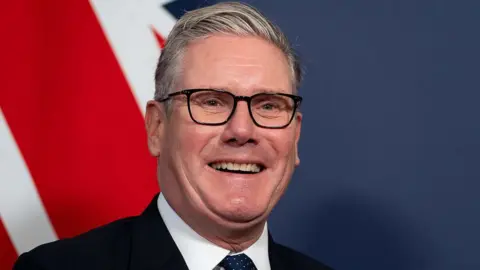
"It is better focusing on the single market instead of the customs bloc for our further alignment," Sir Keir Starmer remarked.
He stated unequivocally that returning to the tariff union was a lower priority, as it conflicts with what he considers a major accomplishment of the last twelve months: the conclusion of high-quality agreements with the America and the Indian subcontinent, with further to come in the Gulf region.
Focusing On the Internal Market
Rather than the customs union, his primary aim is on building a "closer relationship" with the EU's single market, which would avoid tearing up those recently signed agreements with other nations.
When the UK completed its departure from the EU in January 2021, the agreement at the time prioritised freedom from EU standards instead of barrier-free exports for British exporters across Europe.
The current recalibration outlines realigning with EU rules in several sectors to help the easier passage of trade: food and farm exports, energy, and the emissions market.
Commercial Calls
A prominent industry organisation last month released a list of new proposals in other sectors to aid exporters navigate post-Brexit red tape that has hampered the export of products.
Its own survey found that a significant number of business members agreed that the existing agreement was failing to support business expansion.
A range of additional sectors could, feasibly, see a parallel method – convergence with internal market standards – in exchange for minimising post-exit friction across industry, in automotive, pharmaceuticals, or for example in arrangements for VAT.
EU Response
European capitals were unimpressed by the modest aims in the previous recalibration, particularly the London's refusal of proposals put forward by some commentators regarding the virtual readmission of British goods to the internal market.
The exact terms on electricity and agri-food rules is remains to be agreed. A plan for UK defence firms to be involved in a European security fund has stalled over the size of the contribution, after some objections from France. Canada has signed up to the initiative.
Geopolitical Context
The UK has agreed a deal to return to a university exchange programme and to discuss a youth mobility program. This has helped clear the way for ongoing dialogue.
Analysts close to government suggest that the issuing of a key US strategy document has also changed the backdrop on UK relations with Europe.
The paper stated that the US would "cultivate resistance" to Europe's current trajectory and praised the "growing influence" of certain political parties.
Within the administration, there is an acknowledgement that the international situation has evolved further.
Political Pressures
Domestically, the administration also anticipates being outflanked on EU relations not only one political rival, but also others, which is campaigning in its traditional heartlands in upcoming council elections.
The Premier's latest comments are borne of a confluence of commercial realities, domestic pressures and global dynamics as the UK embarks upon a year that will mark the ten-year mark of the historic Brexit referendum.

